You went through a stressful period a few months ago. Maybe it was a demanding job, an illness, an emotional setback, or several sleepless weeks. Things have finally settled down, but now you are noticing more hair on your pillow, in the shower, or on your hairbrush.
It may seem confusing, especially when you feel better emotionally. However, stress can trigger hair fall months after the stressful event, even when life feels normal again.
Why Does Hair Fall Start After the Stress Has Passed?
One possible explanation is a condition called telogen effluvium. Normally, hair follicles move through different growth and resting phases. Significant physical or emotional stress can cause more hairs than usual to enter the resting phase at the same time.
These hairs eventually shed, but the process is delayed. Hair shedding often becomes noticeable around two to three months after the triggering event. By then, the original stress may have disappeared from your daily life.
Common triggers include:
- Intense emotional stress or prolonged anxiety
- High fever, significant illness, or surgery
- Rapid weight loss or restrictive dieting
- Childbirth and other major hormonal changes
- Nutritional deficiencies or certain medications
Not everyone who experiences stress develops excessive shedding. The timing and severity vary from person to person.
How Can You Tell If Stress Is Causing Your Hair Fall?
Stress-related shedding often appears as increased hair loss across the scalp rather than a single bald patch. You may notice more strands while washing or brushing your hair, or feel that your ponytail has become thinner.
However, these signs do not confirm the cause. Iron deficiency, thyroid disorders, hereditary hair loss, scalp conditions, and other medical factors can produce similar symptoms. Stress may also worsen an existing hair-loss condition.
If the shedding is severe, continues for several months, causes visible thinning, or occurs alongside scalp pain, itching, scaling, or bald patches, consult a dermatologist. They can examine your scalp and recommend blood tests when your history or symptoms suggest an underlying issue.
What Is the Right Hair Treatment For Hair Loss?
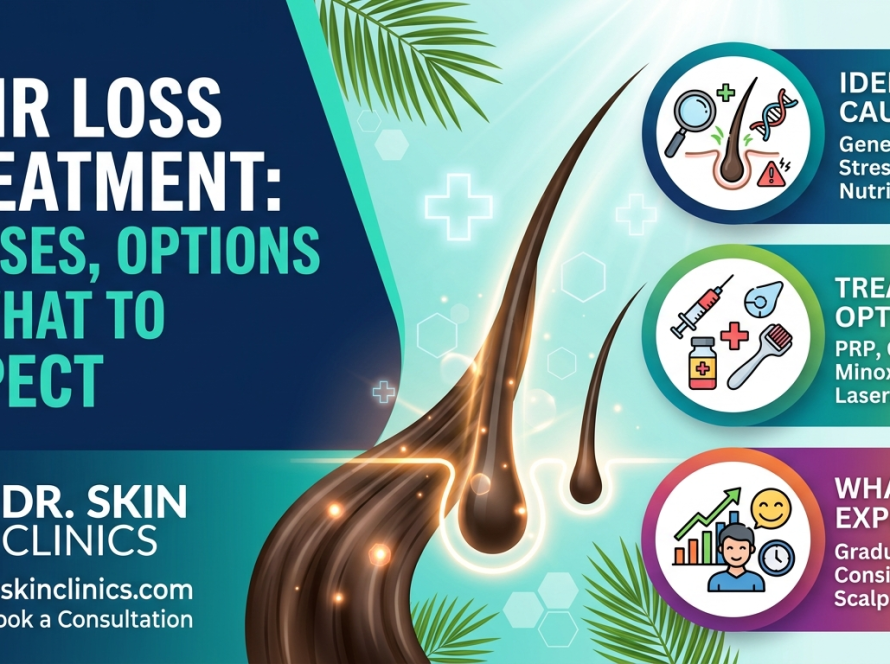
The most effective approach depends on why your hair is falling. There is no single Hair Treatment For Hair Loss that works for every person, so identifying the trigger is an important first step.
For suspected telogen effluvium, treatment usually focuses on addressing the underlying cause. This may involve improving nutrition, correcting a confirmed deficiency, reviewing medications with a doctor, or managing an ongoing health problem.
Adequate protein intake, balanced meals, sufficient sleep, and manageable stress levels can support overall hair health. Avoid starting iron, biotin, or other supplements without a clear reason, as unnecessary supplementation may be ineffective or harmful.
Some people may benefit from medical hair-loss treatments, depending on their diagnosis. A dermatologist can explain whether these are appropriate. Clinics such as Dr. Skin Clinic are one option to consider when seeking a professional assessment for hair and scalp concerns; the treatment plan should be based on an individual examination rather than a standard package.
Will Your Hair Grow Back Once Stress Is Under Control?
In many cases of acute telogen effluvium, shedding gradually improves after the trigger has resolved. New growth may become visible over the following months, although restoring the appearance and thickness of your hair can take longer.
The key is patience combined with proper evaluation. Starting multiple products at once or repeatedly switching shampoos may not address the underlying problem.
If your hair fall began months after a difficult period, the timing could be a clue—but it should not be treated as proof that stress is the only cause. Persistent or recurring shedding deserves medical attention.
Hair Treatment For Hair Loss works best when it addresses the actual reason behind the shedding. Understanding what changed in the months before your hair fall began can help you and your dermatologist choose a more suitable path towards recovery.